US-Iran War Updates Shake Markets as Gold Breaks Down Toward $4,000
Markets are moving through one of the most confusing phases of the U.S.-Iran conflict as military escalation, CPI data, oil risk and gold selling all hit at the same time.
Over the last several hours, the market has moved from a simple “war risk” story into a much more complicated setup. U.S. officials are increasing military pressure on Iran, Iran is warning of retaliation, oil is rising on Hormuz risk, stocks are under pressure, and gold has failed to behave like a traditional safe haven.
Instead of rallying, gold has broken lower.
Gold is now trading close to the $4,000 area after breaking the March low. From the recent $4,700–$4,800 area seen over the past couple of weeks, the drop is roughly $700–$800, or around 15%–17%. From the larger spike high near the $5,600 area on the chart, gold is now down around $1,500–$1,600, which is roughly 28%–29%.
That is a major move.
The important point is that gold is falling even while geopolitical tension is increasing. This shows that the market is currently giving more weight to the U.S. Dollar, Treasury yields, inflation risk and forced liquidation than to safe-haven buying.
Chronology of the Latest Market Updates
Around 7 Hours Ago: Silver Breaks Below Its 200-Day Moving Average
The first major warning came from precious metals outside gold.
Silver dropped back below its 200-day moving average, turning that level into a new risk and bias marker. This showed that weakness was not limited to gold alone. The broader precious metals space was already under pressure.
When silver breaks below a major long-term average, it usually signals that sellers are gaining control and that traders are moving away from metals as a group.
This was an early sign that the precious metals complex was weakening.
Around 4 Hours Ago: Oil Closes Higher as Middle East Risk Builds
Crude oil futures settled higher near $90.03, up around 2.07%, with the day’s high near $91.84.
Oil rose because the conflict is directly connected to the Strait of Hormuz, one of the most important energy shipping routes in the world. Any attack near Iranian coastal facilities, naval assets, tankers, Gulf infrastructure or shipping lanes can quickly raise supply fears.
However, oil did not explode higher in a panic move. This shows that traders are pricing higher risk, but not yet a full shutdown scenario.
The market is worried, but not completely out of control.
Around 4 Hours Ago: Gold Breaks the March Low
The next major market shock came when gold broke below the March low.
Gold was reported down around $174, trading near $4,089. This was important because the March low was a major technical support area. Once gold broke through that level, it confirmed that sellers had taken control.
Gold’s breakdown is especially important because it happened during rising war risk.
Normally, that kind of geopolitical escalation should support gold. But this time, gold is being hit by stronger macro forces:
The U.S. Dollar remains firm.
Treasury yields are elevated.
CPI is keeping Fed pressure alive.
Investors are worried about higher-for-longer rates.
Some markets may be selling gold to raise liquidity.
The move below the March low puts the $4,000 level directly in focus.
Around 3 Hours Ago: CPI Relief Fades and Stocks Reverse Lower
U.S. CPI initially created a brief relief move because the numbers came broadly in line with expectations. But the relief did not last.
Stocks reversed lower, with the S&P 500 and Nasdaq coming under pressure. The market mood changed quickly as military headlines returned to the front.
The U.S. Dollar initially dipped after CPI, but that reaction faded. Treasury yields remained firm, and gold continued to break down.
This is important because it shows that CPI did not save risk sentiment. The market briefly tried to recover, but Iran-related military risk and weak technical momentum took over again.
Around 3 Hours Ago: Trump Situation Room Meeting on Iran Strike Options
Reports then said President Trump held a Situation Room meeting to discuss Iran strike options.
One reported option was a large strike campaign, but short in duration. The stated aim appeared to be to pressure Iran into changing its position in negotiations.
This added another layer of uncertainty.
Markets do not like situations where military escalation and diplomacy are happening at the same time. Traders are being asked to price two opposite outcomes:
A forced deal through pressure.
Or a wider regional conflict.
This is why price action has become unstable.
Around 2 Hours Ago: Hegseth Says the U.S. Will Hit Iran Hard
The next escalation came when U.S. Defense Secretary Pete Hegseth said U.S. forces would be hitting Iran hard.
That statement increased expectations that more strikes were coming. It also signaled that Washington was not stepping back from the conflict.
For markets, this raised the risk of another round of escalation.
Oil remained supported because the strikes were linked to Hormuz and Iranian coastal assets. Stocks weakened because investors became more cautious. Gold, however, continued to trade poorly because the rate and Dollar story remained stronger than safe-haven demand.
Around 1–2 Hours Ago: Explosions Reported Across Southern Iran and Tehran
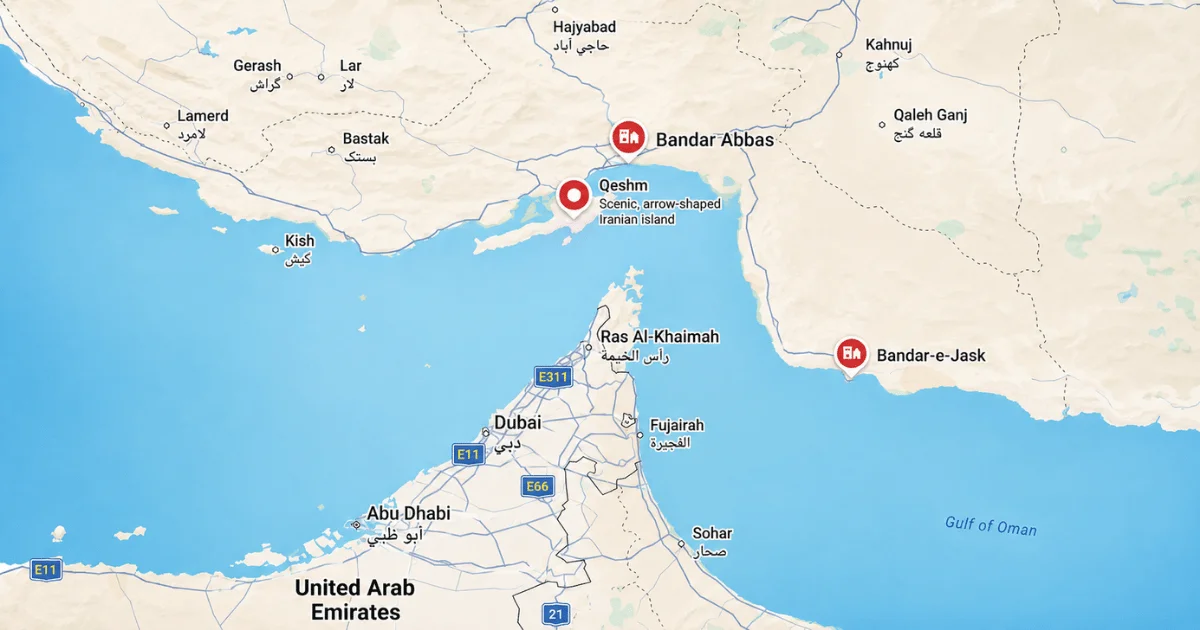
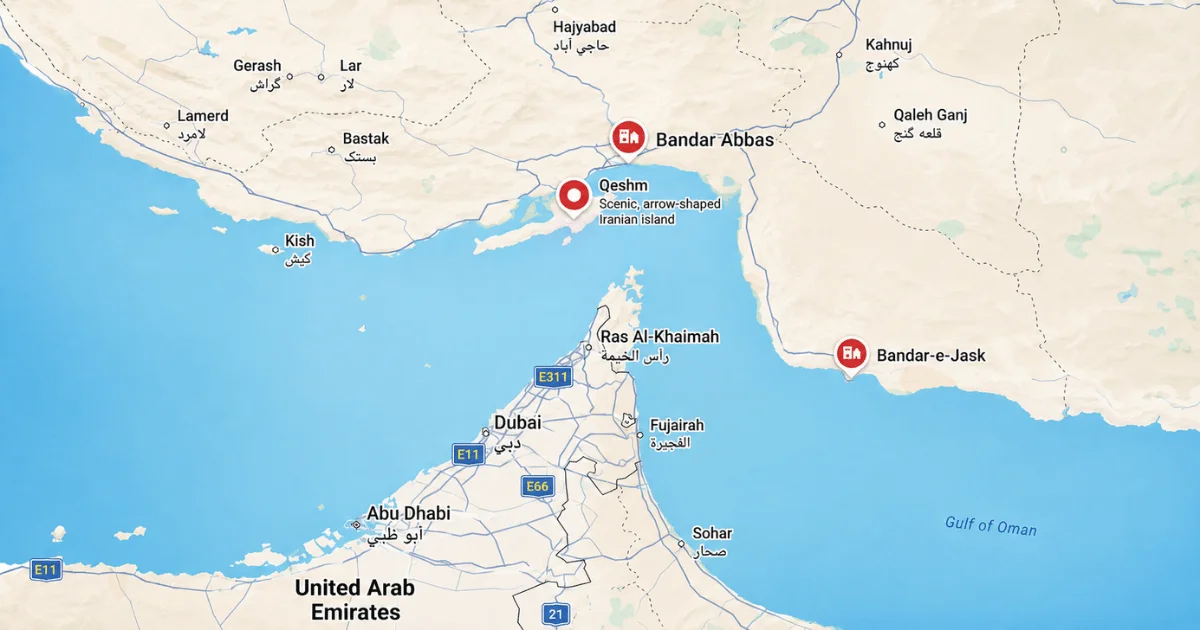
Reports then pointed to explosions across parts of southern Iran, including areas near Bushehr, Asaluyeh, Kish Island and Sirik, with air defense activity also reported around Tehran and Fars province.
These locations matter because some are close to energy and petrochemical infrastructure. Asaluyeh is especially important because it is a major gas and petrochemical hub.
This immediately increased concern about energy supply risk.
Oil traders are focused on whether the conflict starts affecting Iranian energy exports, tanker traffic, shipping insurance, freight rates or Hormuz navigation.
If the conflict starts damaging energy infrastructure or blocking shipping lanes, oil can move much higher.
Around 1 Hour Ago: U.S. Strikes Focus on Navy Bases and Air Defences
Later reports said U.S. strikes were focused on Iranian navy bases, air defense systems, radars and drone command infrastructure.
This is important because the targets appear directly linked to Iran’s ability to threaten shipping around Hormuz.
The reported targeting of gunboats and mine-laying vessels suggests the U.S. may be trying to reduce Iran’s ability to disrupt tanker traffic.
That creates a mixed market reaction.
On one side, it is escalatory because the U.S. is striking Iranian military assets.
On the other side, it may be interpreted as an attempt to secure navigation through the Strait of Hormuz.
This is why oil is higher, but not yet in full panic mode.
Most Recent Update: Hormuz Disruption Starts Affecting Global Crude Flows
The latest market update suggested that the Hormuz crisis is already affecting crude flows, with Asian demand reportedly shifting toward Canadian crude and the Trans Mountain pipeline reaching full capacity.
This is a major signal.
It means markets are no longer treating Hormuz risk as just a headline. They are beginning to adjust supply routes and crude sourcing expectations.
If buyers start looking for alternatives to Middle East supply, then the conflict is already reshaping energy flows.
That can keep oil supported even if the immediate military headlines calm down.
Why Gold Is Falling While War Risk Is Rising
Gold’s move is the most surprising part of the market reaction.
War risk is rising, yet gold is falling toward $4,000. This means the traditional safe-haven story is not working normally.
There are several reasons.
First, the U.S. Dollar remains strong. In geopolitical stress, investors often buy the Dollar as the deepest and most liquid safe-haven currency. That can pressure gold.
Second, Treasury yields remain elevated. If inflation stays high and the Fed remains hawkish, gold becomes less attractive because it does not pay interest.
Third, oil prices are rising. Higher oil can keep inflation sticky, which strengthens the case for higher-for-longer Fed policy. That is negative for gold.
Fourth, large investors may be liquidating gold to raise cash or cover losses elsewhere. In stressed markets, gold can sometimes fall because it is one of the easiest assets to sell.
This is why gold is breaking down even when the war headlines are serious.
Gold Technical Breakdown
Technically, gold is now in a dangerous area.
The break below the March low near $4,097–$4,100 is bearish. Gold has moved close to the $4,000 psychological level, and if that level breaks, the next wave of selling could become sharper.
Key support levels:
$4,000
$3,950
$3,850
$3,750
Key resistance levels:
$4,100
$4,250
$4,350
$4,415
Gold needs to recover back above $4,100 first to reduce immediate downside pressure. A move above $4,250–$4,350 would be needed to show that buyers are returning with strength.
Until then, rallies may remain vulnerable.
Oil Market Impact
Oil is now the clearest beneficiary of the conflict.
The market is pricing risk around:
Strait of Hormuz shipping
Iranian naval assets
Energy facilities
Petrochemical infrastructure
Tanker insurance costs
Alternative crude supply routes
WTI near the $90 area shows that traders are adding a war premium. But the fact that oil has not exploded higher suggests the market still sees this as a serious but not fully uncontrolled escalation.
If Hormuz is disrupted directly, oil can move sharply higher.
If U.S. strikes reduce Iran’s ability to threaten shipping and talks restart, oil can cool later.
For now, oil remains headline-driven.
Stock Market Impact
Equities are under pressure because the market is now facing a difficult combination:
Geopolitical risk
Higher oil prices
Inflation concerns
Elevated yields
Weak gold and metals sentiment
CPI relief fading quickly
Stocks initially tried to recover after CPI, but the bounce failed. That shows investors are not comfortable buying risk while the Middle East situation remains unstable.
Energy stocks may outperform, but broader indices can remain under pressure if oil keeps rising and yields stay firm.
U.S. Dollar Impact
The Dollar remains supported because it is benefiting from both safe-haven demand and Fed expectations.
A stronger Dollar is one of the biggest reasons gold continues to struggle.
If the Dollar stays firm, gold may find it difficult to recover even with war headlines. If the Dollar weakens after softer U.S. data or if yields fall, gold may finally stabilize.
For now, the Dollar remains one of the key drivers of the entire market.
Where We Are Now
Markets are no longer pricing a clean path to peace.
They are pricing a dangerous middle ground where the U.S. is increasing military pressure while still trying to push Iran toward a deal.
That creates confusion.
If the strikes are seen as a short, sharp campaign to force negotiations, markets may eventually calm down.
But if Iran retaliates against U.S. assets, Gulf infrastructure or shipping lanes, the situation could quickly move into a wider regional conflict.
This is why traders should expect volatility to remain high.
What to Expect Next
The next moves will depend on four major factors.
First, whether Iran retaliates directly. A major retaliation could push oil higher, weaken equities and possibly bring gold buyers back.
Second, whether Hormuz traffic is disrupted. Any tanker incident or shipping restriction could quickly increase the oil risk premium.
Third, whether U.S. strikes continue or stop. If strikes end quickly, markets may stabilize. If they expand, volatility can rise further.
Fourth, whether the Dollar and Treasury yields remain strong. If they stay firm, gold may remain under pressure even with war headlines.
BonusPips View
Markets are extremely confused right now because they are trying to price war, diplomacy, inflation and liquidation at the same time.
Oil is reacting directly to supply risk and Hormuz uncertainty. Stocks are under pressure because war headlines and higher oil prices hurt risk sentiment. The Dollar remains supported because investors still see it as a safe-haven and yield-backed currency.
Gold is the most important signal.
Gold is not rising with war risk. It is falling hard. That tells us the market is currently more focused on the Dollar, yields and forced selling than traditional safe-haven demand.
From the recent $4,700–$4,800 area, gold has already fallen roughly $700–$800, or around 15%–17%. From the larger spike high near $5,600, the decline toward $4,000 is close to 28%–29%.
That is a major technical and psychological breakdown.
The key message is simple:
The war is supporting oil, but it is not saving gold.
Gold now needs either a weaker Dollar, falling yields, or a much stronger safe-haven shock to recover. Until that happens, the $4,000 level becomes the most important line in the market.
If $4,000 holds, gold may attempt a short-term bounce.
If $4,000 breaks, the sell-off can deepen quickly.


0 Comments