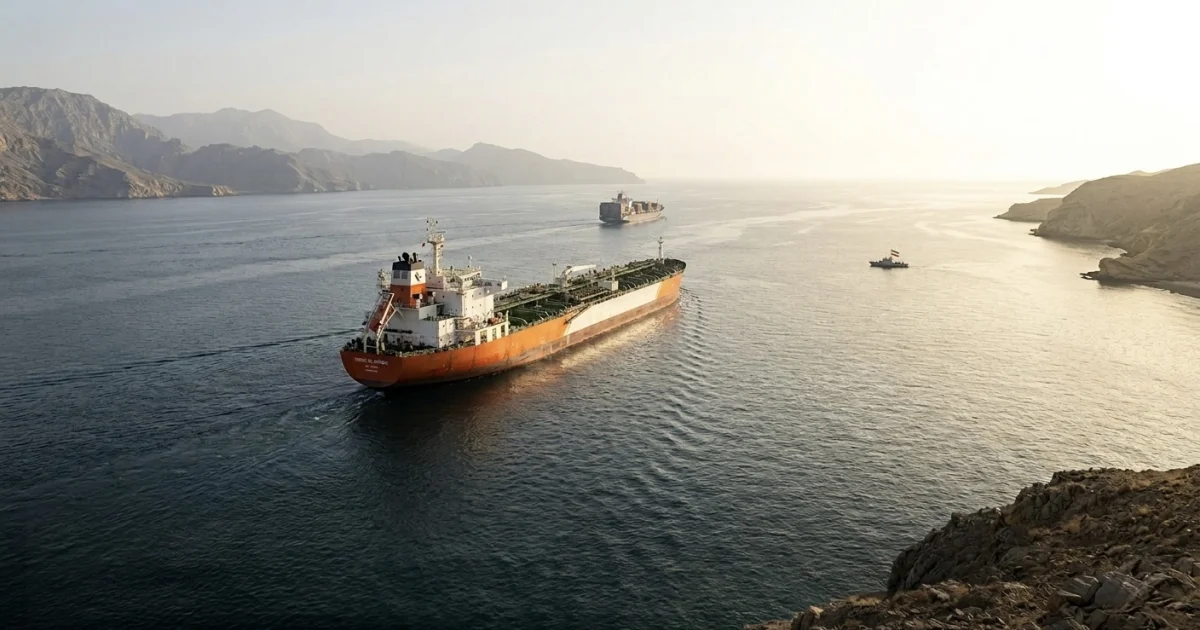
Iran Signals Open Passage for Commercial Shipping Through Strait of Hormuz During Lebanon Ceasefire
Iran has announced that commercial vessels will be allowed unrestricted passage through the Strait of Hormuz during the remaining period of a ceasefire in Lebanon, according to a social media post by Iran’s Foreign Minister Seyed Abbas Araghchi.
The statement, posted on X (formerly Twitter), claims the decision aligns with the terms of the Lebanon ceasefire and follows coordination with Iran’s Ports and Maritime Organisation. It adds that shipping will be permitted along previously announced designated routes, effectively keeping one of the world’s most strategically important maritime corridors open for commercial traffic.
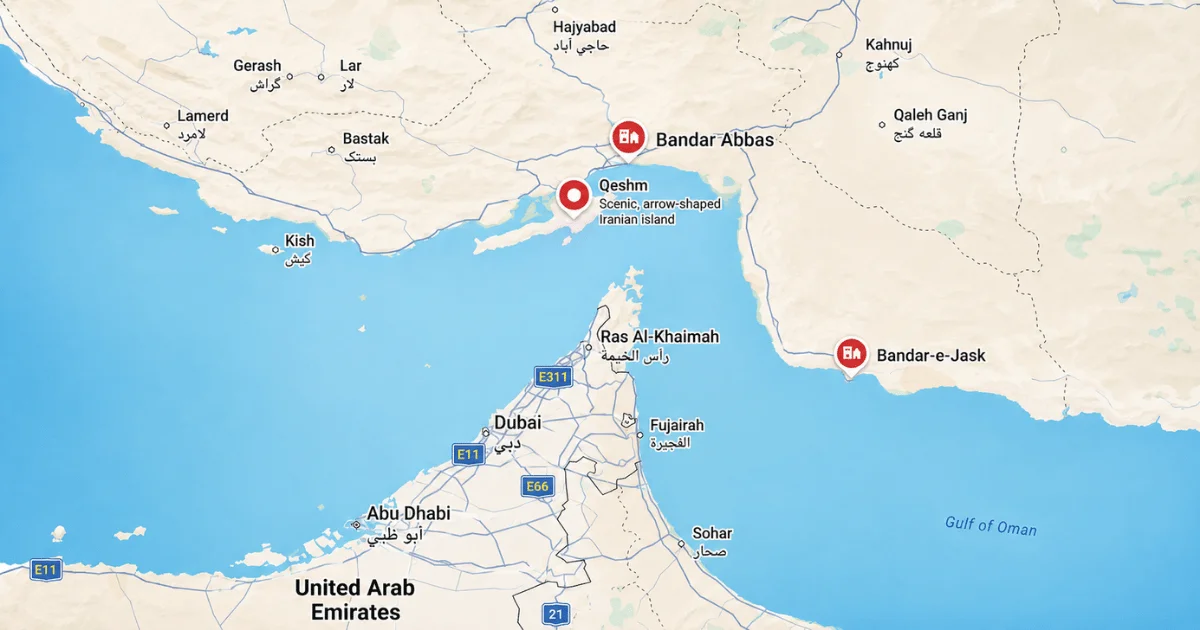
The Strait of Hormuz Strait of Hormuz is a narrow passage connecting the Persian Gulf to the Gulf of Oman and the Arabian Sea. Roughly a fifth of global oil trade passes through it, making it one of the most closely watched chokepoints in global energy markets.
Regional Context
The announcement comes amid a fragile ceasefire in Lebanon, where tensions have periodically spilled over into broader regional security concerns involving maritime routes, proxy conflicts, and energy infrastructure.
Shipping lanes through the Strait of Hormuz have long been sensitive to geopolitical escalation. Any perceived risk of closure or interference tends to have immediate knock-on effects in global oil prices, insurance premiums for tankers, and shipping route planning.
Iran has previously stated that it considers the Strait of Hormuz a strategic lever but has also emphasized its interest in maintaining orderly maritime traffic, particularly for commercial and energy exports that rely on stable sea lanes.
Market Implications
Early reactions in energy markets are expected to focus on whether the announcement reduces the risk premium typically embedded in crude oil prices during periods of heightened regional tension.
Analysts generally treat statements about Hormuz with caution until confirmed through official maritime authority notices or observable changes in naval or shipping behavior. However, even signaling de-escalation can ease short-term volatility in oil futures and tanker insurance rates.
If the arrangement holds, shipping firms may experience:
- Lower war-risk insurance premiums
- Improved route predictability for VLCCs (very large crude carriers)
- Reduced need for rerouting via longer alternative paths such as around the Cape of Good Hope
What to Watch Next
Key developments that will clarify the significance of the announcement include:
- Formal confirmation from Iran’s maritime and port authorities
- Implementation details on corridor enforcement and monitoring
- Responses from Gulf Cooperation Council states
- Oil price movements in Asian trading sessions
- Any updates linking Lebanon ceasefire terms to wider regional security guarantees
Bottom Line
The statement attributed to Seyed Abbas Araghchi signals a potential short-term easing of maritime risk in one of the world’s most important energy corridors. However, until corroborated by official maritime directives, it should be treated as a political signal rather than a fully verified policy shift.
For global markets and shipping operators, the key question is not just whether the Strait of Hormuz Strait of Hormuz remains open today—but whether the apparent de-escalation can hold beyond the duration of the Lebanon ceasefire Lebanon.
The United States Central Command said its naval blockade targeting Iran remains in effect. The statement underscores that, despite claims of de-escalation and the reopening of the Strait of Hormuz, enforcement operations are ongoing.
U.S. officials have indicated that the blockade continues to restrict maritime traffic to and from Iranian ports.
In a statement, António Guterres welcomed Iran’s announcement that the Strait of Hormuz will remain open to commercial vessels for the duration of the ceasefire, calling it “a step in the right direction.” He reiterated the United Nations’ position on the need for full restoration of navigational rights and freedoms in the waterway.
Guterres also expressed hope that the measure, alongside the ceasefire, would help build trust between parties and support ongoing dialogue. He noted that diplomatic efforts are being facilitated by Pakistan.
Donald Trump has now claimed that Iran has agreed to never close the Strait of Hormuz again, describing it as a guarantee that it will no longer be used as geopolitical leverage. He framed the reported commitment as a major outcome of ongoing U.S.–Iran negotiations and a step toward long-term global energy security.
However, while Iran has announced the strait is currently open amid a ceasefire, there has been no formal or independently verified confirmation of any permanent agreement preventing future closures.
Continuing his series of statements on the situation in the Strait of Hormuz, Donald Trump said that Iran, with assistance from the United States, has removed or is in the process of removing all sea mines from the waterway. The claim follows his earlier assertions that the strait is fully open and secure.
There has been no immediate independent confirmation from Iranian authorities regarding the complete clearance of sea mines.
In another social media post, Donald Trump said that the situation involving the Strait of Hormuz is now “over” and that he received a call from NATO offering assistance. He claimed he told NATO to “stay away,” adding that any involvement would only be acceptable if member states were “loading up their ships with oil.” Trump also criticized NATO, describing it as ineffective and referring to it as a “paper tiger.”
U.S. President Donald Trump stated that the Strait of Hormuz is “completely open” and fully operational for maritime traffic. He also said that a naval blockade related to Iran would remain in place until ongoing negotiations reach full completion. Trump added that discussions with Iran are “100% complete” or nearing finalization.

0 Comments