Fed Chair Warsh Builds His Advisory Team: Why the Appointment of Two Veteran Economists Matters for Markets
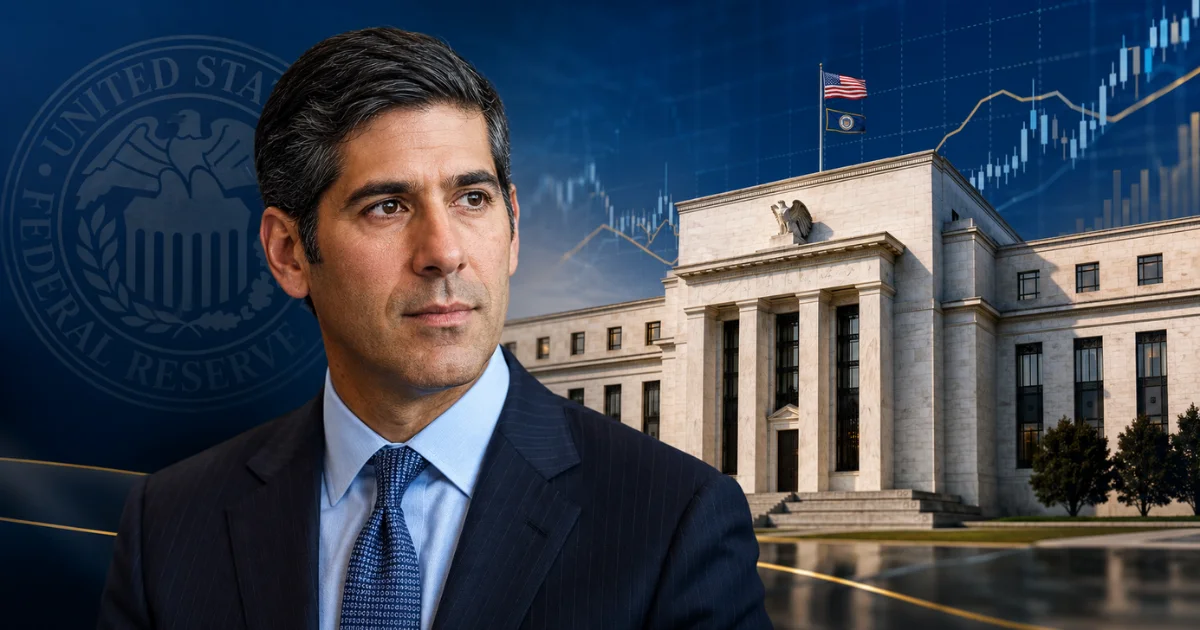
Federal Reserve Chair Kevin Warsh is moving quickly to shape his leadership team and the future direction of the U.S. central bank.
Reports indicate that Warsh has selected Daniel Covitz and Eric Engstrom, two experienced Federal Reserve economists, to serve as advisers. The appointments are important because they offer an early indication of the type of analysis and policy framework that may influence the new Fed chair.
This is not simply a staffing story.
Warsh has already signalled that he wants to review how the Fed communicates, how it uses data, how it studies inflation and productivity, and how it manages its balance sheet. Adding experienced internal economists gives him institutional knowledge at a time when he is also trying to reform the way the Fed operates.
For markets, the message is clear:
The Warsh Fed appears to be building a more data-focused, market-sensitive and reform-oriented policy structure.
Who Are Daniel Covitz and Eric Engstrom?
Daniel Covitz has extensive experience in financial stability, credit markets and the banking system. His research has focused on how stress can build outside the traditional banking sector and how financial-market vulnerabilities can affect the broader economy.
That background matters because financial stability remains closely connected to monetary policy.
When interest rates stay high for longer, pressure can build in credit markets, commercial real estate, private lending, corporate debt and smaller financial institutions. A Fed chair who is focused only on inflation can miss these risks. Covitz’s experience could help the Fed assess whether tighter policy is creating problems beneath the surface.
Eric Engstrom brings a different but equally important perspective.
His work focuses on monetary policy, financial markets, yield curves and macroeconomic risk. He has studied how bond-market signals can help identify the risk of recession, stagflation or changing growth conditions.
This makes Engstrom’s role particularly relevant at the current stage of the cycle.
The U.S. economy is still growing, consumer spending remains firm and unemployment claims are low. But inflation is still above the Fed’s target, Treasury yields remain elevated and markets are uncertain about whether the next major policy move will be a hike, a long hold or an eventual cut.
The combination of Covitz and Engstrom gives Warsh advice from both sides of the policy equation:
Financial-system resilience.
Macroeconomic and market-based risk analysis.
Why These Adviser Picks Matter Now
The appointments come shortly after Warsh’s first FOMC meeting as chair.
At that meeting, the Fed kept rates unchanged in the 3.50%–3.75% range. But the broader message was not dovish. Inflation remained above target, several policymakers still saw the possibility of a future hike, and Warsh made it clear that the Fed did not want to be locked into a fixed policy path.
Warsh also indicated that the Fed may move away from giving markets detailed forward guidance.
This is a major change.
For many years, markets have relied on Fed statements, projections and the dot plot to estimate future rate moves. A less guided Fed means traders may need to pay more attention to incoming data, Treasury yields, credit conditions and the wider market reaction.
That creates a greater role for economists who understand both financial markets and the broader economy.
Covitz and Engstrom fit that profile.
A Fed That May Rely More on Market Signals
Warsh has repeatedly suggested that the Fed should avoid becoming overly dependent on forecasts and outdated policy assumptions.
This does not mean the Fed will ignore economic forecasts. But it suggests that the central bank may place greater weight on real-time market signals, private-sector data, credit conditions and changes in long-term interest rates.
This is where the backgrounds of Covitz and Engstrom become relevant.
Long-term Treasury yields have remained elevated even when markets expected easier policy. That is an important signal because long-term rates affect mortgage costs, corporate borrowing, investment decisions and government financing.
Higher long-term yields can reflect several risks:
Concerns about persistent inflation.
Large fiscal deficits and heavy Treasury issuance.
Higher term premiums.
Supply shocks.
Stronger growth expectations.
Reduced confidence that inflation will return quickly to target.
A Fed that studies these trends more closely may become more cautious about declaring victory over inflation.
It may also be less willing to cut rates simply because growth slows modestly.
Financial Stability Could Become More Important
The choice of Covitz may also suggest that Warsh wants to pay closer attention to financial stability risks.
The Fed has to manage a difficult balance.
If rates stay too high for too long, they can pressure highly indebted companies, banks, commercial real estate markets and households with floating-rate debt.
But if the Fed eases too early, inflation can become more persistent and eventually require even tighter policy later.
This is the challenge facing the Warsh Fed.
A financial-stability focus does not automatically mean easier policy. In fact, it may lead to a more careful and targeted approach. The Fed may try to separate broad monetary policy from problems in specific financial sectors.
For example, if credit stress appears in one area of the market, the Fed may prefer liquidity tools, bank-supervision measures or targeted facilities rather than broad interest-rate cuts.
That approach could keep the policy rate higher for longer while still addressing financial stress where it appears.
Inflation Will Remain the Main Test
Despite the focus on reform, the Fed’s main challenge remains inflation.
Recent data has shown that the U.S. economy is still resilient. Growth has been stronger than previously estimated, personal income and spending have remained firm, core durable goods have improved, and jobless claims are still low.
At the same time, core inflation remains above the Fed’s 2% target.
This creates an uncomfortable policy environment.
The Fed cannot easily justify rate cuts while demand remains strong and inflation is still elevated. But it also does not need to raise rates immediately unless inflation starts accelerating again.
This points toward a cautious, data-driven and potentially volatile policy path.
Warsh’s adviser choices reinforce that view.
The Fed may become less focused on promising future actions and more focused on reacting to the actual evidence.
What It Could Mean for the U.S. Dollar
A more data-dependent Fed can make the U.S. Dollar more reactive to economic releases.
Under a clearer forward-guidance framework, markets can often look beyond one inflation report or one jobs figure because the Fed has already signalled its likely path.
Under a less predictable framework, each major release may have more influence.
Hot CPI, PCE, wages or retail-sales data may strengthen the Dollar quickly because traders will see a higher probability of tighter policy.
Soft inflation, weaker jobs data or falling consumer spending may pressure the Dollar because markets may reduce the probability of future hikes.
This could create wider swings in EUR/USD, GBP/USD, USD/JPY, AUD/USD and NZD/USD.
The Dollar may remain supported when inflation and growth are strong, but the path may become less smooth.
What It Could Mean for Treasury Yields
Treasury yields may become more volatile.
If markets receive less explicit guidance from the Fed, investors may place more weight on inflation data, fiscal policy, supply shocks and bond-market positioning.
This could be especially important at the front end of the yield curve, where expectations for the next Fed move have the strongest effect.
Longer-term yields may also stay elevated if investors remain concerned about inflation, deficits and the amount of government debt entering the market.
For companies and households, this matters because long-term borrowing costs affect mortgages, business investment and consumer credit.
A Fed that is less predictable may not necessarily mean higher rates all the time. But it can mean more uncertainty around rates.
What It Could Mean for Gold and Equities
Gold may become more sensitive to the Dollar and real yields.
If the Fed keeps inflation control as its top priority and rates remain restrictive, gold could face pressure from higher yields and a firm Dollar.
However, if uncertainty around policy communication increases and financial-market stress appears, gold may also attract safe-haven demand.
This creates a mixed environment for precious metals.
Equities may face a similar challenge.
Technology and growth stocks usually prefer falling yields and predictable policy. A more flexible Fed may create more frequent market repricing, particularly around inflation and labour-market data.
On the other hand, a credible Fed that controls inflation without forcing the economy into recession could support the broader market over time.
The outcome will depend on whether Warsh’s reforms improve policy credibility or create more uncertainty.
The Bigger Message for Markets
The appointment of veteran economists is an early sign that Warsh is not trying to run the Fed through headlines or personal judgment alone.
He appears to be surrounding himself with people who understand the internal structure of the Federal Reserve, the credit system, financial stability, bond markets and macroeconomic risk.
That is important because the next phase of policy may be more complicated than a normal tightening or easing cycle.
The Fed must decide how to respond to inflation that remains above target, an economy that is still resilient, elevated long-term yields, changing energy prices and uncertainty around global trade and geopolitics.
A stronger internal advisory team may help Warsh make the Fed more disciplined.
But it may also mean markets receive less certainty about the future path of rates.
BonusPips View
Warsh’s reported choice of Daniel Covitz and Eric Engstrom is significant because it combines financial-stability expertise with deep knowledge of monetary policy and bond-market signals.
The appointments fit the direction Warsh has already outlined.
He appears to want a Fed that is less dependent on rigid forward guidance, more responsive to actual data, more aware of market signals and more willing to review how it communicates with investors.
For traders, this may mean a more volatile policy environment.
The Dollar, Treasury yields, gold and equity markets could react more sharply to inflation, jobs, spending and credit-market data because the Fed may offer fewer clear promises about what it will do next.
The key message is simple:
The Warsh Fed is beginning to build a team for a more flexible and market-sensitive policy era. That may strengthen long-term credibility, but it could also make short-term market moves more volatile.


0 Comments