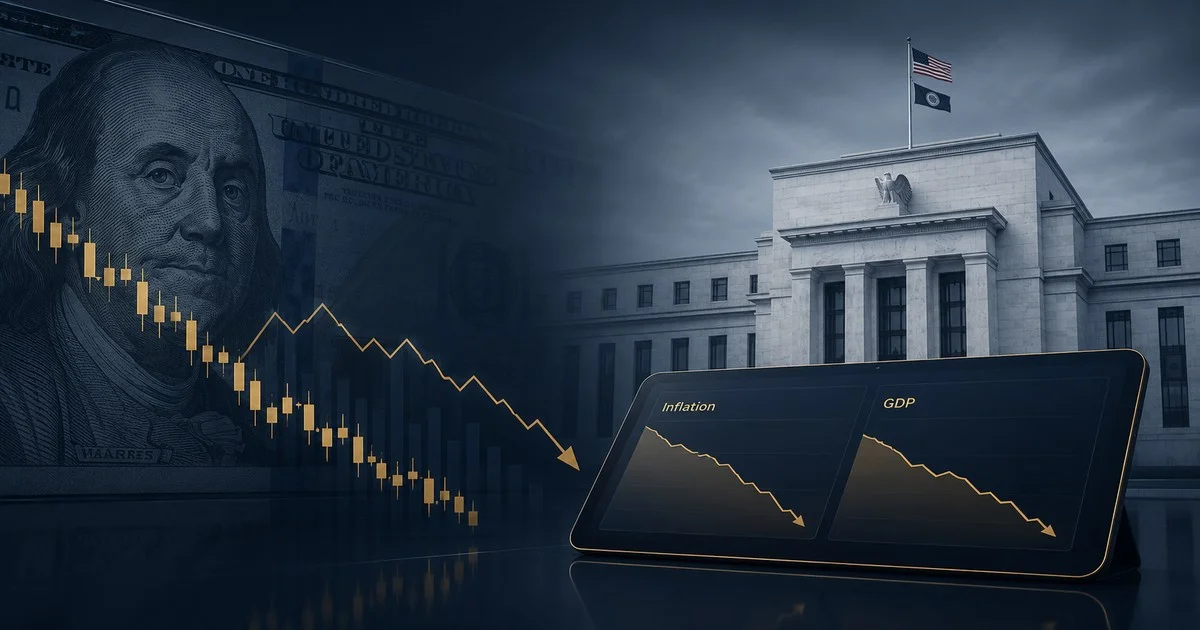
US Dollar Slips as Softer PCE and Lower GDP Revision Cool Hawkish Fed Bets
The US Dollar lost some ground after a mixed set of US economic data gave markets a reason to reduce some of the recent hawkish Federal Reserve pricing.
The main focus was the April PCE inflation report, which is closely watched because it is one of the Fed’s preferred inflation indicators. Core PCE matched expectations on a yearly basis at 3.3%, but the monthly reading came in slightly softer than expected at 0.2%. Headline PCE also came in a little lower than expected on a monthly basis.
For markets, the softer monthly inflation reading was important. It does not mean inflation is solved, but it reduces immediate pressure on the Fed to sound even more aggressive. This helped push the Dollar lower as traders adjusted expectations around future rate moves.
At the same time, the second estimate of US first-quarter GDP was revised lower to 1.6%, compared with the earlier estimate of 2.0%. The revision showed softer consumer spending and weaker investment than previously reported. This matters because the Dollar has recently been supported by the idea that the US economy remains strong enough to handle higher interest rates for longer.
The durable goods report looked very strong at first glance, with headline orders rising sharply by 7.9% in April. However, the details were less impressive. A large part of the strength came from transportation and defense-related orders, while non-defense capital goods excluding aircraft fell. This softer core investment reading suggests that business spending momentum may not be as strong as the headline number suggests.
This is why the Dollar weakened despite the strong durable goods headline. Markets looked beyond the top-line number and focused more on softer inflation, weaker GDP momentum, and signs that business investment may be cooling.
What This Means for the Fed
The data does not give the Fed a clear green light to cut rates soon. Inflation is still above target, and price pressures remain a concern.
However, the latest numbers also reduce the urgency for the Fed to move more aggressively in a hawkish direction. The market reaction suggests traders are now seeing a more balanced picture: inflation remains sticky, but growth momentum is not as strong as previously thought.
That combination is usually less supportive for the US Dollar.
Market Reaction
The Dollar moved lower after the data as traders reduced some safe-haven and rate-supportive positions. EUR/USD and gold found some support as the softer Dollar improved demand for non-Dollar assets.
Gold can benefit when the Dollar weakens because it becomes cheaper for international buyers. EUR/USD can also recover when US yields and Dollar demand soften.
However, the broader trend will still depend on upcoming US data. If labor market numbers and inflation expectations remain strong, the Dollar could recover again. But if more data shows softer growth and cooling inflation, the Dollar may remain under pressure.
BonusPips View
The latest US data package was mixed, but the market focused on the softer parts.
The key message is simple:
The US economy is still resilient, but not as strong as the headline durable goods number suggests. Inflation is still elevated, but the monthly PCE reading was not hot enough to strengthen the Dollar further.
For now, this creates a short-term negative tone for the US Dollar, especially against currencies and assets that benefit from lower US yields.
Traders should watch the next round of jobs data, Fed speeches, and inflation expectations. These will decide whether this Dollar pullback is only a short-term correction or the beginning of a deeper move lower.



0 Comments